Key takeaways
- A sonography (ultrasound) technician is an allied-health professional who operates ultrasound machines to create real-time images of the body — a specialisation within the wider field of radiology and diagnostic imaging.
- You can enter this field after 12th with Science (Physics, Chemistry, Biology) — NEET is not required. A diploma runs about 1–2 years; a bachelor degree runs 3–4 years.
- Demand is real and rising: India has roughly one radiologist per 100,000 people, the diagnostic imaging market is growing at about 8% a year, and hospitals and diagnostic centres across Bihar routinely struggle to hire trained imaging staff.
If you have finished 12th with Science and want a hands-on medical career without spending years chasing an MBBS seat, a sonography course is one of the most practical routes into a hospital. A sonography technician runs the ultrasound machine — the same scan used in pregnancy check-ups, abdominal tests and heart studies — and works alongside doctors every day. This guide explains what the course covers, who can join, how long it takes, what the law in India requires, and what the career looks like in Patna and across Bihar.
What does a sonography technician do?
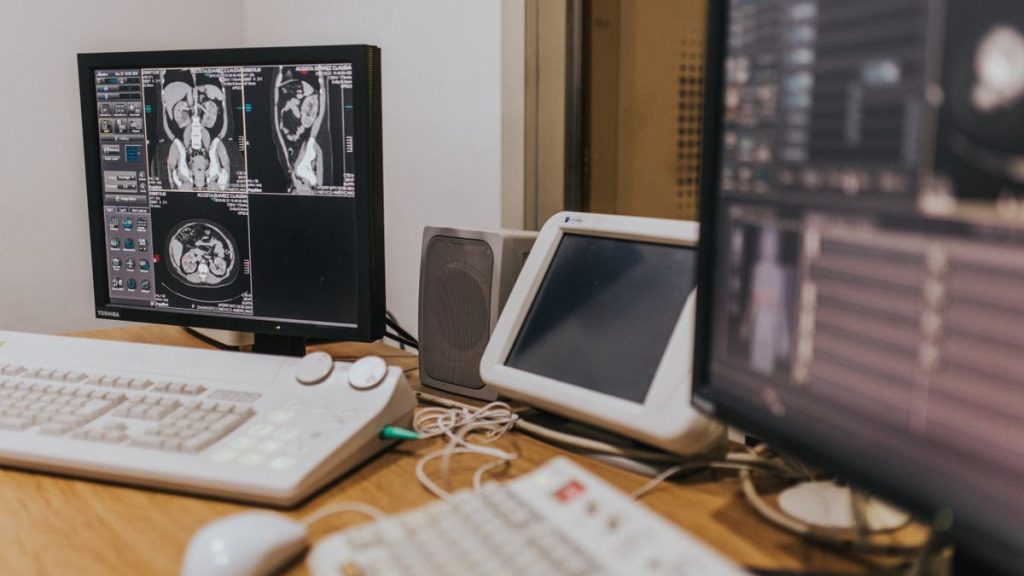
A sonography technician, also called a diagnostic medical sonographer or ultrasound technologist, uses ultrasound equipment to create images of the inside of the body and works closely with physicians to diagnose and monitor medical conditions, according to Cleveland Clinic. Day to day the technician prepares the room and the machine, checks the patient’s details and the doctor’s order, applies gel, moves the probe to capture clear images, checks those images for quality, and passes them to the doctor who reads them.
Ready to build your healthcare career at VIMS?
Talk to our admissions team — direct admission, no entrance exam.
It helps to see where this job sits in the hospital. Sonography is a specialisation within radiology and diagnostic imaging — the same family that includes X-ray, CT and MRI. On the imaging team, the sonographer is the person closest to the patient who captures the scan, while a radiologist (a qualified doctor) interprets the images and signs the final report. This is why a sonography course is most clearly understood as one branch of a broader radiology and imaging career, and why skills you build here open doors across the whole diagnostic-imaging department. Technicians work in hospitals, diagnostic imaging centres, and pathology and sonography labs.
How does ultrasound actually work?
Ultrasound uses sound, not radiation. A hand-held probe called a transducer sends high-frequency sound waves into the body; where those waves meet a boundary between tissues, some of the sound reflects back as an echo. The machine measures how long each echo takes to return and uses that to build a live picture on the screen, as the US National Institute of Biomedical Imaging and Bioengineering explains. The frequencies used are far above what the human ear can hear, and the gel on the skin simply stops air from blocking the sound.
The big advantage over X-ray and CT is safety. Because ultrasound is based on sound waves and not ionising radiation, the US Food and Drug Administration notes it “does not have the same risks” as imaging that uses radiation and has an excellent safety record. That is exactly why ultrasound is the first choice during pregnancy — and why trained sonography staff are always in demand in maternity, gynaecology and general medicine.
Types of ultrasound: the specialisations you can grow into
Ultrasound is not a single skill — it is a set of specialisations, and each one is a career path in its own right. As you gain experience you can move towards the area that interests you most:
- Abdominal — liver, gallbladder, kidneys, pancreas and spleen; used to find gallstones, cysts and other conditions.
- Obstetric and gynaecological — pregnancy scans, checking the growth and well-being of the baby, and the female reproductive organs.
- Echocardiography (cardiac) — scanning the heart, its valves and its function; among the higher-paid specialisations.
- Vascular — arteries and veins, using Doppler to measure blood flow and detect clots and blockages.
- Musculoskeletal — muscles, tendons, ligaments and joints, for injuries and inflammation.
- Breast, paediatric and neurosonology — plus assisting in ultrasound-guided procedures such as biopsies.
These specialisation areas are recognised across the diagnostic radiology field by bodies such as the Radiological Society of North America, which lists abdominal, echocardiography, breast, obstetric and gynaecologic, vascular, paediatric, musculoskeletal and neurosonography among a sonographer’s specialties.
Eligibility: who can do a sonography course after 12th?
The usual entry requirement is 10+2 (Class 12) with Science — Physics, Chemistry and Biology — with a reasonable percentage for degree-level courses. Many students ask whether they need to clear NEET first. For allied-health and paramedical imaging courses the answer is no: as the education portal Shiksha notes, NEET is required for MBBS, BDS and a few other medical courses, while radiology and imaging-technology admissions are based on merit or a common entrance test — not NEET. In practice, admission usually depends on your Class 12 marks.
These qualifications are part of India’s allied-and-healthcare system, which is now regulated by the National Commission for Allied and Healthcare Professions (NCAHP) under the Ministry of Health and Family Welfare. When you choose a college, it is worth checking that the imaging-technology course follows the recognised curriculum.
How long is a sonography course, and what does it cover?
There are two common routes, and the right one depends on how much time you want to invest:
- Diploma / certificate route — roughly 1 to 2 years, focused on hands-on scanning skills and getting you into a working role quickly.
- Bachelor degree route — a 3 to 4 year programme in radiology and imaging technology, usually including a clinical internship, that covers ultrasound alongside the wider imaging field.
A good course mixes classroom teaching in anatomy, physics and patient care with real practice on ultrasound machines and time inside a hospital or diagnostic centre. That clinical practice matters more than anything on paper — employers hire the technician who can already handle the probe confidently on day one.
The PC-PNDT Act: the one legal point every sonography student must know
In India, obstetric ultrasound is governed by a specific law, and understanding it is part of being a responsible sonography professional. The Pre-Conception and Pre-Natal Diagnostic Techniques (PC-PNDT) Act, 1994 prohibits the use of ultrasound for determining the sex of a foetus, and prenatal sex determination is a criminal offence. Every ultrasound clinic must be registered under the Act, must display a notice stating that sex determination is not carried out, and must maintain proper records of every scan.
The Act also sets rules on who may perform pregnancy scans: obstetric ultrasound must be carried out by a registered medical practitioner or a qualified sonologist, so a technician typically performs or assists these scans under the supervision of a registered doctor. This is an important point for planning your career — knowing the law, and working within it, is exactly what good hospitals and diagnostic centres look for. You can read the government’s position on the Act through the Press Information Bureau and the Ministry of Health.
Salary and career scope for a sonography technician in India
Honest guidance matters here, because salary figures online vary a lot depending on the source and the sample size. As a realistic picture, a fresher in India can expect roughly ₹15,000 to ₹25,000 a month to begin with, rising steadily with experience, specialisation and the type of employer. Technicians in higher-skill areas such as cardiac (echocardiography) and vascular scanning, and those in larger corporate hospitals and metro cities, tend to earn at the higher end. Treat any single “average salary” headline online with caution — the reliable pattern is that pay grows meaningfully as you build hands-on expertise and move into a specialisation.
What makes the outlook genuinely positive is demand. India’s diagnostic imaging market was valued at about USD 845.91 million in 2024 and is projected to grow at around 8.28% a year, according to TechSci Research. At the same time the country has only about one radiologist per 100,000 people, and Tier-2 and Tier-3 cities — Patna very much included — regularly report long searches to fill imaging roles. Government investment is following the need: the Union Budget for 2026-27 committed a phased outlay to set up and upgrade Allied Health Professional Institutes with the aim of creating close to one lakh skilled professionals over five years, as reported by the Press Information Bureau. For a well-trained sonography technician, that combination of a growing market and a real shortage of trained hands is exactly the environment you want to enter.
Why demand for sonography keeps growing
Several trends point the same way. New diagnostic and imaging centres are opening rapidly in smaller cities and towns across Bihar and the rest of India. An ageing population and a rise in lifestyle conditions mean more scans of the heart, abdomen and blood vessels. Because ultrasound is safe, painless and radiation-free, it is often the first test a doctor orders. And portable, point-of-care ultrasound is now reaching rural areas that never had imaging before — extending the need for trained operators well beyond the big hospitals. Every one of those machines needs a skilled technician to run it.
Study sonography and radiology at VIMS, Patna
At Viraj Institute of Medical Science in Patna, ultrasound and sonography are taught as part of our radiology and imaging technology programme — so you learn scanning alongside the wider imaging skills that hospitals value, with hands-on practice and a clear route into a working role. Admission is direct and based on your 12th Science marks; there is no entrance exam to clear. If a career in medical imaging is what you are after, the radiology and imaging pathway is the place to start.
Ready to start your career in medical imaging? Direct admission on your 12th Science marks — no entrance exam.
Frequently asked questions
What is a sonography course?
A sonography course trains you to operate ultrasound machines and capture diagnostic images of the body. It is an allied-health qualification within the radiology and imaging field, available as a 1–2 year diploma or a 3–4 year bachelor degree after 12th Science.
Can I do a sonography course after 12th?
Yes. The standard requirement is 12th (10+2) with Physics, Chemistry and Biology. You do not need to clear NEET for a sonography or imaging-technology course — admission is usually based on your Class 12 marks.
How many years is a sonography course?
A diploma or certificate in ultrasound/sonography usually takes about 1 to 2 years. A bachelor degree in radiology and imaging technology, which covers ultrasound within the wider imaging field, takes 3 to 4 years including a clinical internship.
What are the sonography course fees?
Fees depend on the college and the qualification level. For exact, current fees for the radiology and imaging technology course at VIMS Patna, please see our admission page or speak to our admission team directly.
Is a sonography course the same as a BSc or a diploma?
Both routes exist. You can take a shorter diploma focused on scanning skills, or a longer bachelor degree that gives you a broader qualification across radiology and imaging technology. The right choice depends on your eligibility and how much time you want to invest — the counselling team can guide you.
Do I need NEET for a sonography or ultrasound technician course?
No. NEET is required for MBBS and a few other medical courses, but sonography and imaging-technology courses are allied-health qualifications admitted on merit — no NEET is needed.
Start my application at VIMS
Choose how you would like to begin. UGC-recognised programs, hospital-based training in Patna.